

Choosing the right bit is not simply a matter of size, metal, or discipline. Every bit applies pressure somewhere, and understanding where that pressure acts is essential if we want the horse to accept the contact, stay relaxed, and respond willingly.
A bit may act on several areas: the bars of the mouth, the tongue, the lips, the cheeks, the poll, the curb groove, or even the nose in the case of bitless or combination designs. No pressure point is automatically “good” or “bad”. What matters is how the individual horse accepts that pressure, how much pressure is applied, and whether the rider uses the hand with feel and timing.
Bar pressure
The bars are the toothless spaces between the front teeth and the molars. Almost every bit applies some degree of pressure here. Many horses accept bar pressure well, especially when it is even and not excessive.
However, too much pressure on the bars, or pressure concentrated on a very small area, can make a horse uncomfortable. Signs may include lifting the head, opening the mouth, leaning, resisting the hand, or becoming generally unsettled in the contact.
Tongue pressure
The tongue is large, sensitive, and very important in bit acceptance. Some horses are quite happy with tongue pressure and may find it stabilising. In many cases, tongue pressure can encourage the horse to lower the head and soften into the contact.
Other horses dislike too much pressure on the tongue. They may push against the bit, open the mouth, put the tongue over the bit, or become heavy or defensive. These horses may prefer a mouthpiece that offers tongue relief, such as a ported, curved, or anatomically shaped design.
Pinch or “nutcracker” pressure
A single-jointed snaffle can create what is often called a nutcracker action. When the reins are used, the mouthpiece can fold in the middle and squeeze the tongue and bars. Depending on the horse’s mouth shape and the rider’s hand, this can create quite a sharp feeling.
Some horses tolerate this well, but others react by raising the head, hollowing, opening the mouth, or avoiding the contact. Double-jointed, curved, locking, or solid mouthpieces can reduce this pinching effect and spread the pressure more comfortably.
Lip and cheek pressure
Bits with fixed cheeks, full cheeks, D-rings, or similar designs can apply pressure against the sides of the horse’s face. This can be useful for steering and lateral guidance, especially with young horses or horses that need clearer turning aids.
Cheek pressure should not be confused with harshness. Used correctly, it can give the horse a clearer signal. But correct fitting is very important: a bit that is too wide, too narrow, or badly positioned can create rubbing, pinching, or unclear aids.
Poll pressure
Poll pressure is created by leverage. It is usually found in bits with shanks, gag actions, curb bits, Pelhams, driving bits, and some hackamores. When the reins are used, the cheekpieces and headpiece can apply downward pressure over the poll.
For horses that accept it, poll pressure can encourage the head to lower and the horse to yield. But because leverage can multiply the effect of the rider’s hand, it must be used carefully and with good timing.
Curb groove pressure
Bits with a curb chain or curb strap act on the chin groove. This area is sensitive, so curb pressure can be strong if the chain is tight, narrow, or used with long shanks.
A curb chain or strap should be fitted correctly and adjusted with care. Leather or softer straps, curb guards, or a wider surface can help spread the pressure. The goal should always be clear communication, not force.
Nose pressure
Bitless bridles, hackamores, and combination bits may apply pressure to the nose. Many people assume bitless automatically means gentle, but that is not always true. The nasal bone is sensitive, and mechanical hackamores can apply significant leverage.
Correct placement is essential. A nosepiece that sits too low can be dangerous; one that is too tight can cause discomfort and resistance. As with any bit or bridle, the horse’s reaction should guide the choice.
The goal: acceptance, not resistance
The aim of bitting is not to find the strongest tool, but the clearest and most comfortable way to communicate. A well-chosen bit should help the horse accept the contact, stay settled in the mouth, salivate, and respond without fear or tension.
Every horse is different. Mouth conformation, tongue size, palate height, lips, teeth, training level, rider experience, and even physical issues elsewhere in the body can influence how a horse reacts to a bit.
The best bit is not the one that promises the most control. It is the one that allows horse and rider to work together with clarity, comfort, and trust.
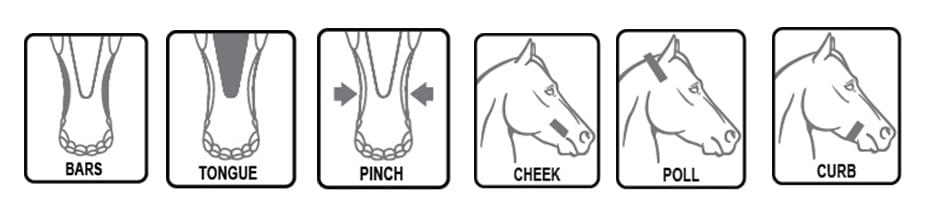
Image source: Bombers Education – “Basic Pressures applied by a bit”.